
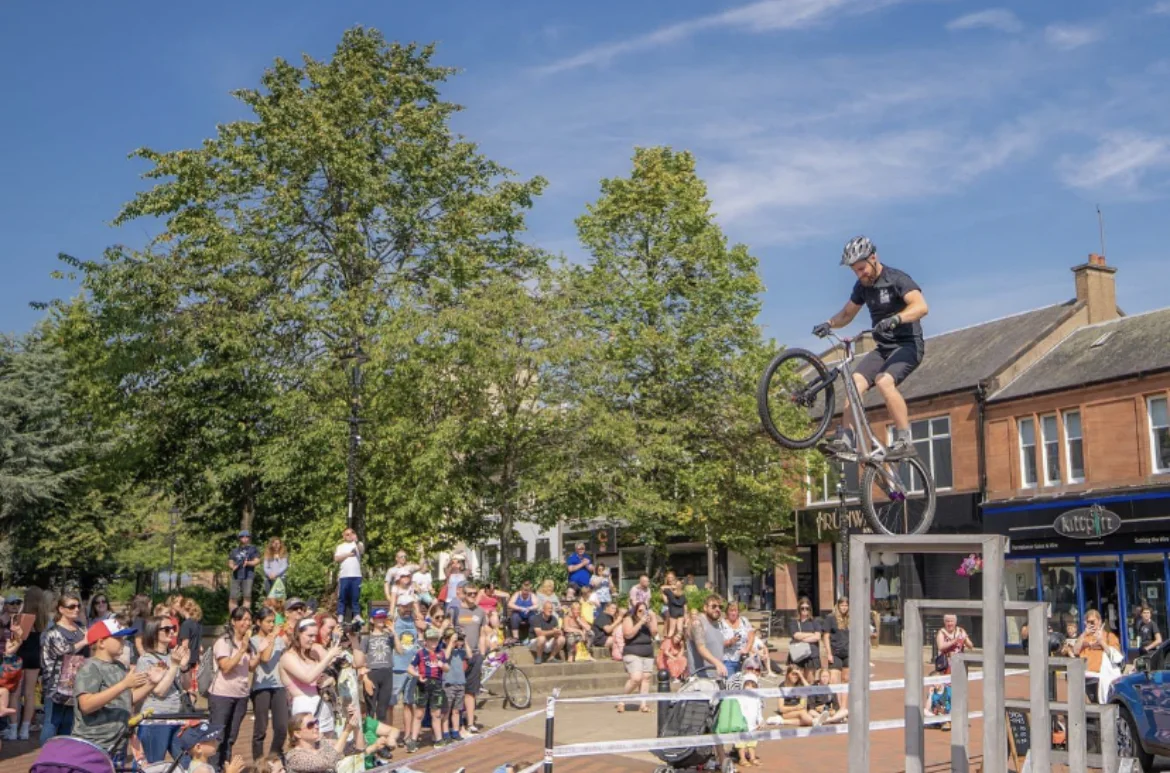
How can a bike display work on a high street?
Town centres are not showgrounds: pedestrian routes, shop access, loading arrangements and sightlines all matter. Portable equipment allows the team to discuss different layouts, including constrained public spaces, rather than relying on a permanent ramp installation.
A managed performance area remains essential. Confirm the usable space, surface, barriers, power arrangements (the team can bring its own), noise considerations and safe audience positions with the site manager. Permission to use public space remains the organiser’s responsibility.
What makes the programme suitable for community events?
Live commentary helps draw attention to the act and explain the riding to passers-by. Repeat displays can serve visitors arriving at different times; interaction can be considered where practical. The agreed programme needs to fit the wider event rather than obstruct other activities.
For Hatfield Community Day, Cllr Shirley Asare of Hatfield Town Council said the stunts “really brought that adrenaline and excitement to the event” and described them as a standout moment people were still talking about.
What should councils and BIDs include in an enquiry?
Send the proposed date, address, approximate clear area, photos or a plan, expected audience flow, timetable and any restrictions on vehicle access or sound. If you are unsure whether the area is workable, ask before assuming a town-centre site is too small. The space guide lists the main considerations.
How do you keep a public event workable?
Identify the boundaries of the display area and keep essential pedestrian movement outside it. Consider where people will gather before the start, not only during the riding. Agree who controls the space if another attraction runs nearby and whether the site manager needs advance details of equipment access. The team can discuss its own setup and presentation needs; local permissions and wider public-space management remain with the organiser.