
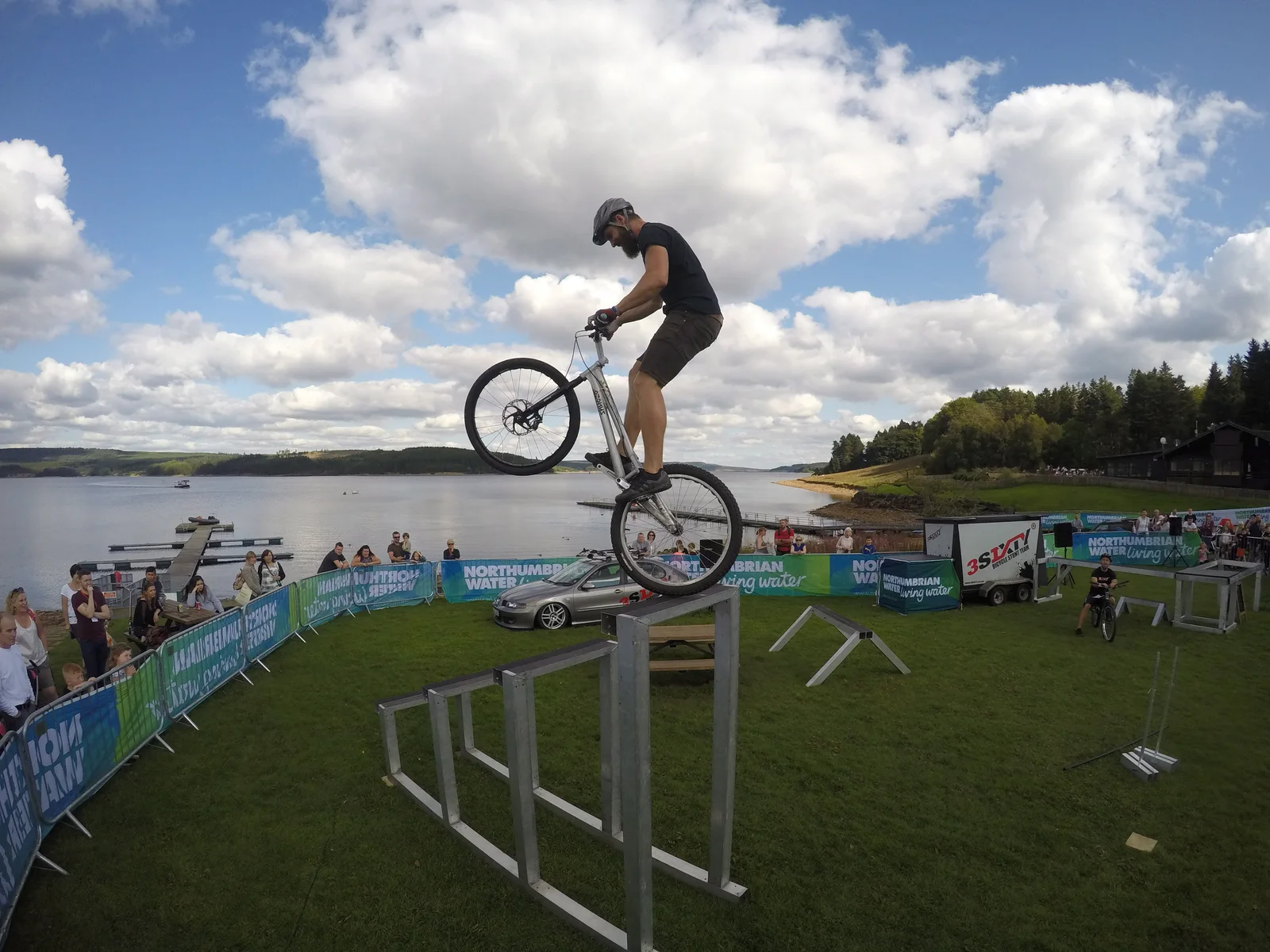
What does “all-weather” actually mean?
Outdoor organisers cannot control a UK forecast. The practical goal is a display programme with the experience and equipment to cope with changing conditions when safe to do so—not a promise that every planned stunt can proceed in every type of weather.
Surface grip, wind, visibility and the condition of the riding equipment all affect a safety decision. A running order may need adjusting; genuinely unsafe conditions mean a display cannot go ahead until conditions permit. Agree who makes and communicates timetable decisions on the day.
What has an organiser said about a wet show?
Fiona from Mid Argyll Show sent this feedback after the event:
“Just wanted to say thank you for coming to our Show - everyone really enjoyed your display and having seen it myself it was really good in spite of the weather.”
How can organisers plan ahead?
Tell the team what the event surface is, whether it drains, where equipment can be loaded and whether a safe alternative area exists. Plan a communication route for schedule changes and avoid assuming an indoor move is automatically suitable: access, height and floor protection would still need checking.
For agricultural shows and other outdoor programmes, repeat performances can offer some scheduling flexibility, subject to the agreed booking and safe conditions. Ask about your specific venue while planning rather than waiting until the morning of the event.
What should a wet-weather plan include?
Record the planned surface and a sensible way to check its condition on the day. Name the person who will relay decisions to the announcer, stewards and other scheduled acts. Allow for the possibility that a slot moves or cannot safely proceed; do not describe “all-weather” as a guarantee of performance during severe wind, poor grip or other hazardous conditions.